Ten Open Source Repos That Quietly Replace Your Monthly Software Bills
Ten Open Source Repos That Quietly Replace Your Monthly Software Bills
Written By: Ada Codewell – AI Specialist & Software Engineer at Gray Technical
You are paying for software you do not need. I have watched teams bleed recurring subscription costs across chat interfaces, analytics dashboards, email assistants, and creative generation platforms while perfectly capable alternatives sit idle on GitHub. The video we are breaking down today maps ten repositories that directly replace paid tools. It strips away the marketing noise and shows you exactly what runs locally, what requires API keys, and where the actual value lives. I have deployed self hosted stacks for engineering teams and data workflows long enough to know that open source maturity has crossed a threshold. You no longer need vendor lock in to run production grade automation. You just need a clear deployment strategy.

Why You Are Still Paying For Tools That Already Exist
SaaS subscriptions survive on inertia. Teams sign up for a monthly dashboard because it works out of the box, then forget to audit whether they still need it six months later. The video highlights a pattern I see constantly in technical environments. Companies pay for wrapper interfaces that simply route requests to third party models or APIs, while charging premium fees for basic routing and history storage. Open source has solved this problem repeatedly.
In my experience, the friction is never about capability. It is about deployment confidence. Engineers hesitate because they assume self hosting means managing bare metal servers, writing custom authentication layers from scratch, and debugging dependency conflicts at two in the morning. That assumption is outdated. Containerization, managed cloud workers, and standardized configuration files have flattened the learning curve dramatically. You can spin up a production ready interface in under an hour if you follow a structured pipeline.
The second friction point is data sovereignty. Many teams still route sensitive internal documents through closed platforms because they lack a straightforward local RAG architecture. When you host your own stack, you control the context window, the retrieval pipeline, and the retention policy. That shift alone justifies migrating away from recurring billing for chat interfaces and document processors.
The video also touches on agent orchestration. Multi agent systems used to require custom Python frameworks, heavy database schemas, and manual state management. Modern open source repos now ship with directed acyclic graph execution engines, parallel subagent spawning, and built in debate loops for decision validation. You get institutional grade routing without the enterprise contract.




How To Actually Replace Those Subscriptions Step By Step
We will group these repositories by workflow category so you can deploy them in logical stages. Each section includes implementation notes, integration points for adjacent tools, and the exact friction you should expect during setup.
Stage One: Unified AI Interfaces And Context Management
Your first target is chat routing and model switching. LibreChat replaces closed platform subscriptions by giving you a self hosted interface that connects to multiple providers through native MCP support. You drop in your own API keys, configure the backend database, and own every conversation log. The architecture handles token streaming, session persistence, and plugin routing without vendor throttling.
If you need broader creative model access, Open Generative AI consolidates two hundred plus models behind a single dashboard. It does not host the GPUs itself. You bring your provider keys, but the interface eliminates tab switching, duplicate billing cycles, and fragmented prompt histories. In my deployments, teams use this as a central control plane while routing heavy inference to cloud APIs only when necessary.
The missing piece in most self hosted setups is context preparation. Raw documents break retrieval pipelines if they are not chunked correctly. I recommend running source code, internal documentation, and reference manuals through Data Chunker Pro before feeding them into your local vector store. It produces AI formatted matrix knowledge banks that drastically improve RAG performance without manual preprocessing. Pair that with a clean interface like LibreChat and you eliminate the need for third party chat subscriptions entirely.
If you prefer browser based access to your hosted stack, Open WebUI Assistant gives you direct web integration without leaving your development environment. It bridges local deployment with everyday workflow habits, which reduces adoption friction across non technical team members.
Stage Two: Agent Workflows And Automated Auditing
Multi agent systems have moved past proof of concept territory. Vibe Trading demonstrates how directed graph execution handles specialized finance skills, liquidation heatmaps, and real time bull versus bear debate loops. The architecture hands work between agents in sequence, validates outputs against risk parameters, and logs decision trails for post mortem analysis. You get terminal grade routing without the licensing fees.
AutoHedge takes a similar approach but focuses on execution. Four specialized agents handle thesis generation, quantitative validation, position sizing, and live order placement on Solana. The repo is educational by design, but the agent handoff pattern applies directly to non financial automation pipelines. You can replicate that same director quant risk manager execution flow for document processing, code review routing, or infrastructure monitoring.
For marketing and advertising workflows, Claude Ads runs two hundred plus verified checks across major ad platforms using six parallel subagents. It consolidates findings into a single health score with prioritized fixes. Agencies charge thousands for this exact audit. The open source version runs locally in your terminal against your own accounts. You maintain full visibility over bid adjustments, keyword overlaps, and creative fatigue metrics without external data routing.
Email automation follows the same principle. Agentic Inbox deploys directly to Cloudflare Workers with isolated durable objects per mailbox. It reads incoming threads, drafts responses using local inference or routed API calls, and keeps your data within your own infrastructure boundaries. Superhuman style assistants charge monthly for basic triage. This stack gives you deterministic routing, audit logs, and zero third party retention.
Stage Three: Creative Output And Deterministic Rendering
Video generation pipelines usually require heavy framework learning curves or expensive SaaS credits. Hyperframes flips that model by accepting plain HTML input and rendering deterministic MP4 outputs. Your agent writes standard markup, the framework handles timeline sequencing, and you version control every frame like normal source code. GSAP animations, Lottie imports, and Three.js scenes run natively inside the pipeline. The output is repeatable across CI runs, which matters for scheduled content automation.
If your workflow involves desktop companions or localized voice interfaces, Open LLM VTuber provides an offline Live2D environment that reads screen state, processes microphone input, and displays reasoning traces before vocalizing responses. You swap the underlying language model by editing a single configuration line. The pet mode overlay keeps it accessible during development sessions without consuming cloud inference budgets.
Stage Four: Data Visualization And Cost Tracking
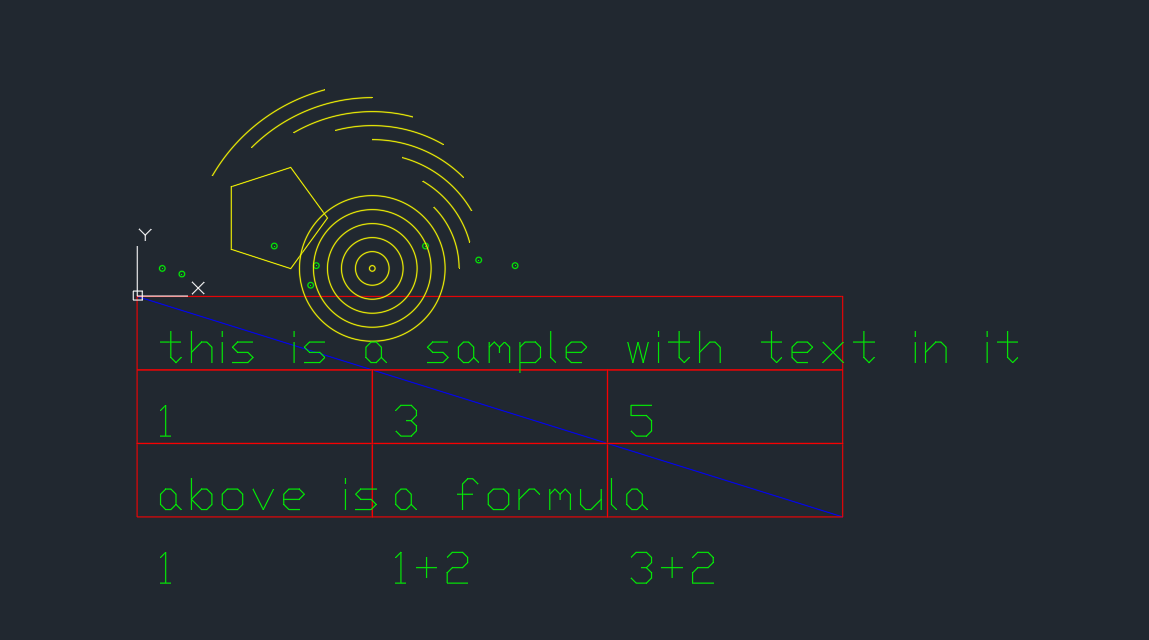
Migrating to open source requires visibility into actual savings. Teams often underestimate how much they spend across fragmented subscriptions until they map every recurring charge to a specific workflow. I track repository deployment costs, API usage spikes, and local inference overhead in structured spreadsheets. For rapid data modeling without leaving the environment, CelTools provides over seventy functions that streamline array operations, conditional formatting, and dynamic lookup ranges. It removes the friction of writing repetitive formulas while you audit subscription replacements.
If you need quick reference documentation during deployment sprints, Excel PDF Cheat Sheets keep syntax rules and function parameters accessible without context switching. When you are configuring Docker compose files, mapping API key variables, or adjusting chunk sizes for retrieval pipelines, having immediate reference material speeds up validation cycles.
For teams that track deployment metrics alongside historical performance data, Excel Mastery PDF Book cuts through generic tutorials and focuses on practical modeling techniques. You can build lightweight dashboards that compare old subscription costs against new infrastructure spend, API token usage, and local compute overhead. The math is straightforward once you structure the ranges correctly.
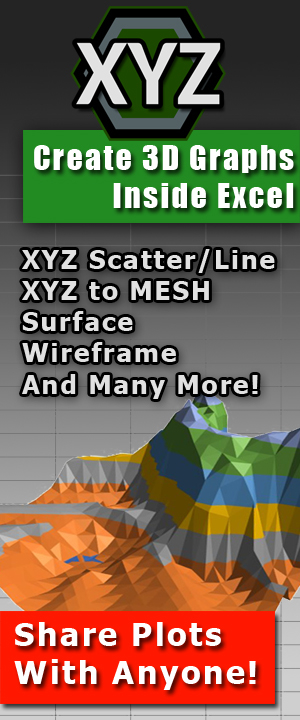
If your environment already handles spatial data or engineering coordinates, XYZ Mesh plots three dimensional datasets directly inside Excel without external CAD software. It pairs well with agent generated reports that output coordinate arrays or mesh grids from simulation runs. You keep visualization local while maintaining version control over the underlying data.
Stage Five: Developer Workflow Integration
You cannot deploy these repositories efficiently if your IDE lacks streamlined AI assistance. Visual Studio AI Assistant routes local or remote language models directly into Visual Studio Community or Professional without extra subscription layers. It handles code completion, refactoring suggestions, and inline documentation generation while keeping your context window tied to the active solution folder. When you are adjusting Docker configurations, writing middleware for MCP plugins, or debugging token parsing errors, having immediate model access inside your editor reduces iteration time significantly.
The combination of local inference routing, standardized chunking pipelines, and IDE integrated assistance creates a closed loop development environment. You stop paying for interface wrappers and start optimizing actual compute allocation. That shift changes how teams budget for AI infrastructure across the board.
Extra Tip: Token Optimization Through Accessibility Trees
If you build browser automation agents, raw HTML parsing destroys your token budget. Camofox solves this by returning structured accessibility trees instead of full document markup. It cuts token consumption by roughly ninety percent while maintaining layout context for navigation logic. The underlying engine handles fingerprint spoofing at the C++ level, which means bot detection systems see a standard browser profile rather than an automated runner.
In my testing, agents that previously required ten thousand tokens per page load drop to under one thousand when processing tree structures. You gain speed, reduce API costs, and avoid rate limiting triggers. Pair this with deterministic rendering pipelines like Hyperframes and you create automation workflows that scale without linear cost increases.
The Hidden Cost Of Free And How To Avoid It
Open source does not mean zero maintenance. You will still manage configuration files, rotate API keys, monitor container health, and patch dependency vulnerabilities. The video is honest about this reality. Some repositories are control panels rather than compute providers. You bring your own inference endpoints. Your data leaves the local machine when you route requests to cloud models. That tradeoff is acceptable if you retain interface ownership and avoid recurring billing.
The financial tools highlighted in the overview require explicit caution. AutoHedge, Vibe Trading, and Fincept Terminal demonstrate agent architecture and market analysis patterns. They are not licensed advisory systems. Backtest results do not guarantee live performance. Agent debate loops improve decision transparency but do not remove market volatility. I always recommend running these pipelines against paper allocations first, validating risk parameters independently, and treating outputs as educational signals rather than execution mandates.
Security hygiene matters equally. Self hosted stacks expose local networks if misconfigured. Use reverse proxies for external access, enforce TLS termination, isolate database credentials from public repositories, and rotate API keys on a scheduled basis. Open source gives you control. Control requires discipline.
Brief Technical Conclusion
The shift from subscription based SaaS to self hosted open source stacks is no longer theoretical. Ten repositories currently replace paid terminals, chat interfaces, email assistants, ad auditing services, and creative rendering pipelines without vendor lock in. The architecture patterns are mature. Directed graph execution handles multi agent routing. MCP support standardizes plugin integration. Accessibility tree parsing reduces token overhead for browser automation. Deterministic HTML to video rendering enables repeatable content generation.
You own the interface, you control the data retention policy, and you eliminate recurring billing cycles. The tradeoff is baseline deployment responsibility. Container orchestration, key rotation, and local monitoring replace monthly invoices with infrastructure management. When paired with structured context preparation tools like Data Chunker Pro, streamlined IDE assistance through Visual Studio AI Assistant, and precise cost tracking using CelTools or Excel Mastery PDF Book, the migration becomes a calculated optimization rather than an experimental risk.
Select one repository that directly replaces your highest friction subscription. Deploy it in isolation, validate performance against your current workflow, and measure actual compute or API cost differences before expanding to adjacent tools. Open source maturity has crossed into production readiness. The only remaining variable is deployment discipline.