Transforming Excel Tables into CAD Drawings: A Game Changer for Your Workflow
Transforming Excel Tables into CAD Drawings: A Game Changer for Your Workflow




Imagine this scenario: you’re working on a project that requires precise drawings, and your data is neatly organized in an Excel spreadsheet. The problem? You need to convert these tables into CAD format without losing any of the details or formatting. It’s a common challenge for many professionals who use both Excel and CAD software.
But what if I told you there’s a tool that can seamlessly bridge this gap, allowing you to create CAD-style drawings directly from your Excel tables? That’s exactly what we’re going to explore in this tutorial inspired by the video below:
Why This Matters: The Power of Integration
In my experience, one of the biggest time-wasters in any workflow is the need to switch between different software applications and manually re-enter data. When you’re dealing with precise measurements and detailed tables, this can be particularly frustrating.
The ability to convert Excel tables into CAD drawings directly within Excel is a game-changer. It not only saves time but also reduces errors that can occur during manual data transfer. This integration allows for a more streamlined workflow, making your workday just a little bit easier and more efficient.
Key Insights from the Video
The video demonstrates how to use Excel Draw, an add-in that allows you to create CAD-style drawings inside Microsoft Excel. Here are three key insights from the video, along with my take on each:
1. Creating Data Tables in Excel
The first step is creating your data table in Excel. This might seem straightforward, but there’s an art to organizing your data for optimal conversion.
In my experience, it’s crucial to ensure that your tables are well-structured and free of any unnecessary merged cells or complex formatting that could complicate the conversion process. Keep it simple and clean for the best results.
2. Converting Cells to CAD
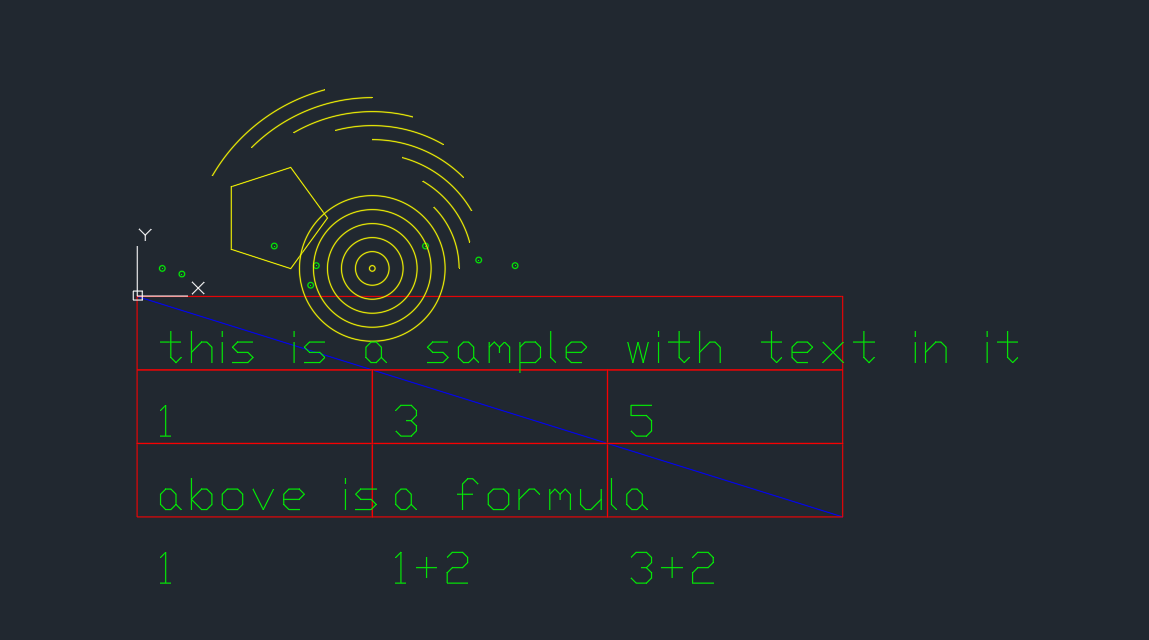
Once you have your data table ready, you can use Excel Draw’s “Cells to CAD” feature to convert it into a DXF file format. This step involves selecting your table and choosing the appropriate settings for text colors, font sizes, and scaling.
One of the standout features of Excel Draw is its ability to maintain the exact formatting from Excel in your CAD drawing. This means that if you have specific font sizes or text colors in your table, they will be preserved in the DXF file.
3. Exporting to DXF
The final step is exporting your newly created CAD drawing to a DXF file. Excel Draw makes this process seamless, allowing you to save and open your DXF files directly from Excel.
In my experience, the ability to export directly to DXF is invaluable for anyone who works with CAD software. It eliminates the need for intermediate steps or additional software, making your workflow more efficient.
Alternative Tools and Methods
While Excel Draw is a powerful tool for converting Excel tables to CAD drawings, it’s not the only option out there. Here are a few alternatives you might consider:
1. AutoCAD’s Data Extraction Tool
AutoCAD offers a data extraction tool that allows you to import data from Excel and create tables within AutoCAD. While this method is effective, it requires switching between applications and can be more time-consuming than using Excel Draw.
2. Using VBA Scripts
For those who are comfortable with coding, creating custom VBA scripts to automate the conversion process is another option. This approach offers flexibility but requires a significant amount of time and technical expertise.
3. Third-Party Conversion Software
There are several third-party software options available that can convert Excel tables to CAD drawings. However, many of these tools come with their own set of limitations and may not offer the same level of integration as Excel Draw.
A Personal Anecdote: The Power of Integration in My Workflow
I remember a time when I was working on a complex engineering project that required precise measurements and detailed tables. At the time, I was manually transferring data from Excel to AutoCAD, a process that was not only time-consuming but also prone to errors.
It wasn’t until I discovered Excel Draw that I realized how much more efficient my workflow could be. The ability to convert Excel tables directly into CAD drawings within the same application was a game-changer for me.
The time and effort saved by eliminating the need to switch between applications allowed me to focus on other aspects of the project, ultimately leading to better results. This experience reinforced my belief in the power of integration and the importance of finding tools that can streamline your workflow.
Conclusion: The Future of Excel and CAD Integration
The ability to convert Excel tables into CAD drawings is a powerful tool for anyone who works with both applications. By integrating these two software platforms, you can eliminate the need for manual data transfer, reduce errors, and save valuable time.
Whether you’re an engineer, architect, or designer, Excel Draw offers a seamless solution that can transform your workflow. By embracing this technology, you can take advantage of the best features of both Excel and CAD, creating a more efficient and effective work environment.

Technical Summary
The process of converting Excel tables to CAD drawings using Excel Draw is straightforward and effective. By following the steps outlined above, you can seamlessly integrate your data into a CAD environment without losing any formatting or details.
The key technical aspects of this solution include:
- Maintaining text colors and font sizes during conversion
- Preserving exact measurements and dimensions
- Direct export to DXF file format for compatibility with CAD software
In summary, the integration of Excel tables into CAD drawings using Excel Draw is a powerful solution that can significantly enhance your workflow. By eliminating the need for manual data transfer and reducing errors, you can focus on what matters most: creating high-quality designs and projects.
Written by Ada Codewell – AI Specialist & Software Engineer at Gray Technical