Transform Your Raw XYZ Data into Interactive 3D Graphs with Ease
Written By: Ada Codewell – AI Specialist & Software Engineer at Gray Technical
Transform Your Raw XYZ Data into Interactive 3D Graphs with Ease
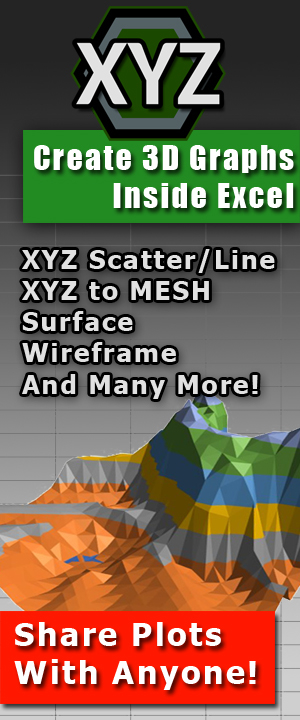
In the world of data visualization, converting raw XYZ data into meaningful 3D graphs can often be a challenging task. Excel, while powerful, falls short when it comes to complex 3D graphing. This is where XYZ Mesh comes in as an indispensable tool.




Why Data Visualization is Important
Data visualization plays a crucial role in various fields such as geology, land surveying, oceanic farming, conservation, atmospheric analysis, and even fire prevention instrument development. It allows professionals to interpret complex data sets more effectively, making informed decisions based on visual insights.
The Challenge with Excel’s 3D Graphing
While Microsoft Excel is a versatile tool for many analytical tasks, it struggles when it comes to creating detailed and interactive 3D graphs. The default charting options in Excel are limited, and the process of creating complex 3D visualizations can be both time-consuming and frustrating.
Why It Happens
Excel’s limitation with 3D graphing arises from its primary focus on 2D data presentation. The software was not originally designed to handle the intricacies of 3D plotting, leading to a less-than-optimal experience for users who need more advanced visualization tools.
Real-World Examples
Let’s look at three real-world scenarios where converting XYZ data into interactive 3D graphs can provide significant benefits:
1. Geological Surveys
Geologists often work with large datasets that map out subsurface geological formations. These datasets require detailed visualization to understand the distribution of minerals, shale layers, and other geological features. Using XYZ Mesh, geologists can quickly convert their XYZ data into interactive 3D graphs that reveal the complexities of subsurface formations.
2. Oceanic Farming
In oceanic farming, understanding the topography of the seafloor is crucial for placing aquaculture structures. By using XYZ Mesh to visualize seafloor data in 3D, farmers can identify optimal locations for their farms, ensuring they avoid areas with steep slopes or unstable terrain.
3. Conservation Efforts
Conservationists often rely on topographical data to monitor changes in landscapes over time. With XYZ Mesh, they can convert raw elevation data into interactive 3D models that help track deforestation, glacial retreat, and other environmental changes.
Step-by-Step Solution: Using XYZ Mesh
XYZ Mesh simplifies the process of converting raw XYZ data into interactive 3D graphs. Here’s a step-by-step guide to get you started:
1. Installing XYZ Mesh
To begin, download and install XYZ Mesh from the official website. Ensure your system meets the minimum requirements, which include a 600MB HD space, a 3.2 GHz processor, 4GB of memory, a Windows OS, and .NET Framework 4.7.1 or higher.
2. Inputting XYZ Data
Open XYZ Mesh and paste your raw XYZ data into the input tab. The software will automatically update the graph on the right side of the window, allowing you to visualize your data immediately.
3. Converting to 3D Graphs
Once your data is imported, click on the “Convert to Excel Mesh” button. This will convert your XYZ data into a format that Excel can use to create 3D graphs. You can also use the interpolation feature to fill in any gaps in your data for a more accurate representation.
4. Exporting to Excel
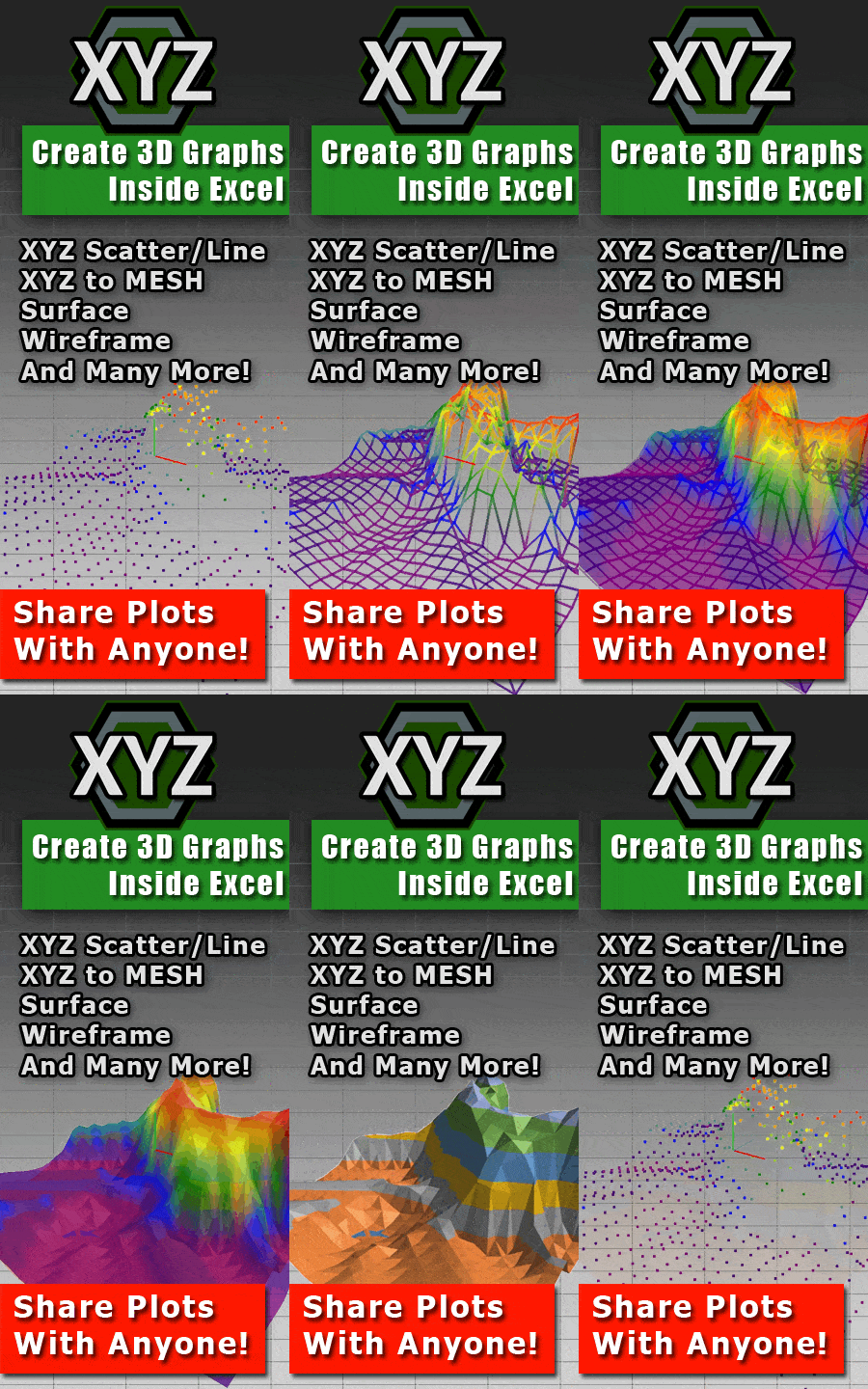
After converting your data, you can export it directly into Excel by clicking on the “Export to Excel” button. Choose the type of graph you want—whether it’s a 3D Scatter Plot, Surface Graph, or Wireframe—and XYZ Mesh will generate an interactive Excel document.
Advanced Features and Customization
XYZ Mesh offers several advanced features that allow for extensive customization of your 3D graphs:
1. Curving Data
One of the standout features of XYZ Mesh is its ability to curve data and fill in empty spots automatically. This ensures that your 3D graph is smooth and accurate, even if your original data has gaps.
2. Custom Coloring Options
You can customize the colors of your graphs based on percentages or specific height values. This feature is particularly useful for highlighting different regions or features in your data.
3. 3D Interactive Models
For those who need to create immersive 3D environments, XYZ Mesh offers a 3D interactive model feature. This allows you to add textures, paths, and points to your surface, creating a fully navigable 3D scene.
Conclusion
Converting raw XYZ data into interactive 3D graphs doesn’t have to be a daunting task. With XYZ Mesh, you can transform your data into meaningful visualizations with just a few clicks. Whether you’re a geologist, oceanic farmer, or conservationist, XYZ Mesh provides the tools you need to make informed decisions based on clear, interactive 3D graphs.
Written By: Ada Codewell – AI Specialist & Software Engineer
Additional Resources
For more information and tutorials on how to use XYZ Mesh, visit the official website or check out their YouTube channel for video guides. If you have any questions or need support, feel free to reach out to their customer service team.