Stop Losing Tickets: Automate Your Google Forms with G-Tickets
Written By: Ada Codewell – AI Specialist & Software Engineer at Gray Technical
Stop Losing Tickets: Automate Your Google Forms with G-Tickets
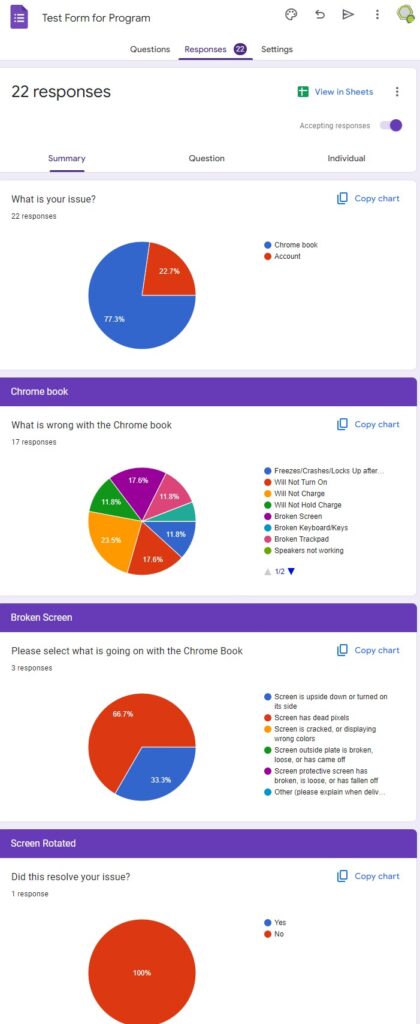
Do your Google Forms submissions end up scattered across spreadsheets, lost in emails, or simply forgotten? Many businesses, schools, and organizations rely on Google Forms for support requests, client inquiries, and task management. However, managing these submissions manually is inefficient, prone to errors, and wastes valuable time. G-Tickets solves this problem by transforming your Google Forms into a streamlined, automated ticketing system.




Why Google Form Submissions Get Lost in the Chaos
The core issue isn’t the Forms themselves; it’s the lack of a structured system to handle the responses. When submissions are simply added to a spreadsheet, they become difficult to track, prioritize, and resolve. Information can be misinterpreted, deadlines can be missed, and ultimately, customer satisfaction suffers. This disorganization stems from the inherent limitations of using a simple form alongside a raw spreadsheet—it’s designed for collection, not for workflow management.
Step-by-Step: Automating Your Ticketing System with G-Tickets
G-Tickets simplifies what is typically a complex setup. Here’s how it works, broken down into clear steps:
- Create a Google Form: Design your form with the fields necessary to capture the information you need for each ticket. This can be for IT support, customer service, or any other process.
- Link the Form to a Google Sheet: This sheet will act as the central repository for all submissions.
- Generate the Google Apps Script: G-Tickets provides a pre-built script (copy-and-paste text) that establishes communication between the form and the sheet. This script automatically checks for new submissions and initiates the ticketing process.
- Configure G-Tickets: Within the G-Tickets application, link your Google Form and Google Sheet. Customize settings like email notifications, user access, and ticket status tracking.
- Start Receiving Automated Tickets: As new submissions arrive on your Google Form, G-Tickets automatically creates corresponding tickets, updates statuses, and manages workflows – all without manual intervention.
Example: Streamlining IT Support Requests
Imagine an organization relying on Google Forms to receive IT support requests. Without G-Tickets, these requests might be tracked haphazardly, leading to delays and frustration. With G-Tickets, each submission is instantly converted into a ticket with a unique identifier. The ticket includes the user’s details, the description of the issue, and the urgency level. The IT team can then prioritize these tickets, assign them to specific technicians, and track progress until resolution. Completion triggers an automated email to the user, confirming the issue has been addressed.
Sample Formulas (Not Directly Used in G-Tickets, But Illustrative of Underlying Data Flow)
While G-Tickets abstracts away the technical details, understanding the underlying data flow can be helpful. Here are examples of how you *might* handle data manually, to illustrate how G-Tickets automates these steps:
- Calculating Ticket Priority (in Google Sheets):
=IF(ISBLANK(F2), "Low", IF(G2="Urgent", "High", "Medium"))(This formula assigns priority based on urgency flagged in the Google Form.) - Automatically Sending Confirmation Emails (Using Google Apps Script – Simplified):
function sendConfirmationEmail(ticketData) {
  // Construct email subject and body
  var subject = "Your Ticket Has Been Resolved";
  var body = "Dear " + ticketData.name + ",\n\nYour ticket has been resolved.";
  // Send email
  MailApp.sendEmail(ticketData.email, subject, body);
}
(G-Tickets handles this automation without requiring manual scripting.)
Extra Tip: Leveraging User Accounts and Security
G-Tickets includes a built-in user account system that requires login credentials after the default administrator password is updated. This adds a crucial layer of security, preventing unauthorized access to sensitive ticket data. Consider creating different user roles with varying levels of access, such as administrators, technicians, and standard users.
Conclusion
Managing Google Forms without a structured ticketing system can quickly become overwhelming. G-Tickets provides a simple, yet powerful solution to automate your workflows, enhance data security, and reclaim valuable time. Stop losing tickets and start streamlining your processes. Learn more and download G-Tickets today.