Creating CAD-Style Drawings in Microsoft Excel with Excel Draw
Creating CAD-Style Drawings in Microsoft Excel with Excel Draw




I’ve always been fascinated by the intersection of productivity tools and specialized software. In this post, I’m excited to share my experience using Excel Draw, an innovative add-in for Microsoft Excel that allows you to create CAD-style drawings directly within your spreadsheet.
Inspired by a recent video tutorial, I’ll be walking you through the key features and functionalities of Excel Draw, offering my own insights and commentary on how to make the most out of this powerful tool.
The Problem: Why Create CAD Drawings in Excel?
You might be wondering why anyone would want to create CAD-style drawings in Microsoft Excel. Isn’t that what specialized CAD software is for? While it’s true that dedicated CAD tools are more robust and feature-rich, there are situations where integrating drawing capabilities directly into your spreadsheet can be incredibly useful.
The Solution: Key Features of Excel Draw
Let’s dive into the key features demonstrated in the video and how you can leverage them to create professional-quality drawings within Excel.
Installing and Activating Excel Draw
The first step is to install Excel Draw. Unlike many other add-ins, this one requires a bit of manual setup. Once installed, you need to activate the license by entering your activation code in the dedicated window.
One handy feature is that you can transfer your license between different machines if needed. This flexibility allows you to use Excel Draw on multiple devices without having to purchase separate licenses.
Creating Basic Shapes: Lines, Points, and Rectangles
The core of Excel Draw‘s functionality lies in its ability to create various shapes. Let’s start with the basics:
Line Objects
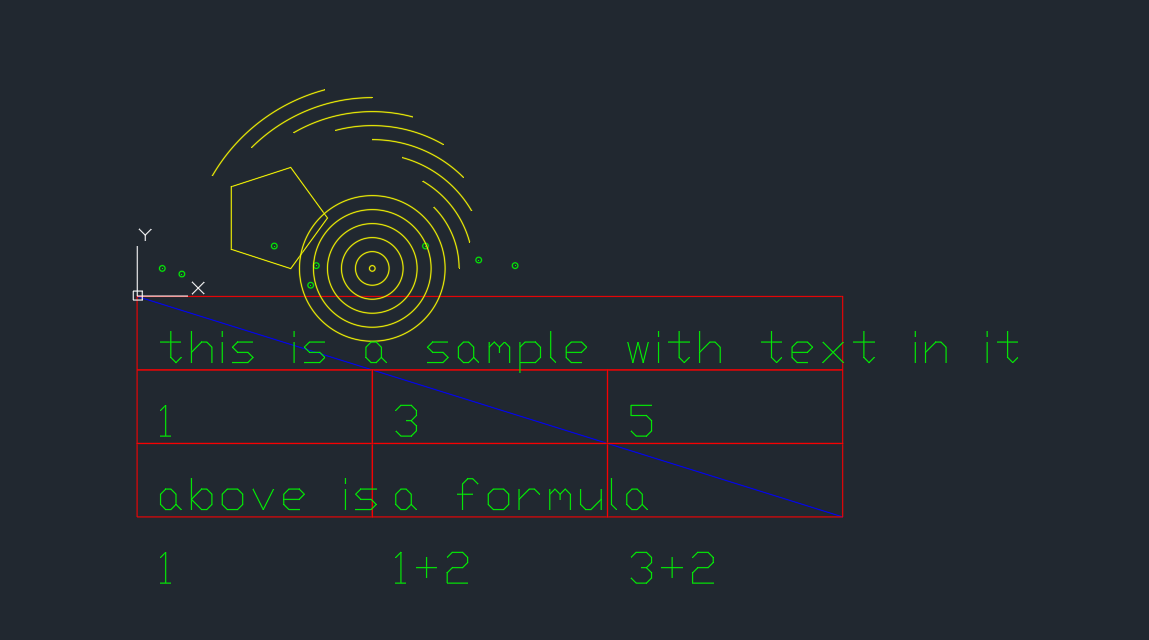
Creating lines is straightforward. You define a starting point (X1, Y1, Z1) and an ending point (X2, Y2, Z2). For simple 2D drawings, you can ignore the Z values, but they come in handy for more complex 3D designs.
In my experience, this is particularly useful when you need to create diagrams that visualize relationships between different data points within your spreadsheet. For instance, if you’re tracking inventory levels and want to show how items move from warehouse A to B, drawing lines directly in Excel can make the process more intuitive.
Point Objects
Points are even simpler—they only require a single set of coordinates (X, Y, Z). This is useful for marking specific locations on your drawing. For example, if you’re creating a floor plan and need to indicate where certain pieces of equipment will be placed, adding points can help visualize this information clearly.
Rectangle Objects
Rectangles require both starting (bottom left) and ending coordinates (top right). This might seem counterintuitive at first, but once you get the hang of it, drawing rectangles becomes second nature. I’ve found this feature particularly useful for creating simple floor plans or layout designs.
Advanced Shapes: Text, Circles, Arcs, and Polygons
Excel Draw isn’t just limited to basic shapes. It also supports more advanced objects like text, circles, arcs, and polygons.
Text Objects
Adding text to your drawings is simple but powerful. You specify the starting location (X1, Y1, Z1) and then input your text string in X2. Optionally, you can also set font size and color using Y2 and Z2 respectively.
In my work, I often use this feature to label different parts of a diagram or add annotations that explain specific data points. It’s a great way to make your drawings more informative without having to rely on external documentation.
Circle Objects
Circles are defined by their center point (X1, Y1, Z1) and radius (X2). This is perfect for creating circular layouts or marking areas of influence. For example, if you’re designing a network diagram, circles can represent different zones within your network.
Arc Objects
Arcs build on the concept of circles by adding start and end angles. This allows you to create partial circles or segments, which is useful for more complex designs. In my experience, arcs are particularly handy when creating pie charts or other circular data visualizations.
Polygon Objects
Polygons let you define custom shapes by specifying the center point (X1, Y1, Z1), radius (X2), number of sides (Y2), and rotation angle (Z2). This flexibility makes it easy to create a wide variety of shapes.
The Smart Create Tool: Automating Drawing Creation
One of the most powerful features in Excel Draw is the Smart Create tool. This feature allows you to automate the creation of multiple objects at once by specifying their properties in a table.
For instance, if you have a list of data points that need to be represented as different shapes (e.g., circles, rectangles), you can simply input this information into your spreadsheet and use Smart Create to generate all the shapes automatically. This is incredibly useful for large-scale projects where manual drawing would be too time-consuming.
Cells to CAD: Converting Spreadsheet Data to Drawings
Excel Draw‘s Cells to CAD feature takes automation a step further. You can convert an entire range of cells into a drawing with just a few clicks.
This is particularly useful when you have data that needs to be visualized quickly. For example, if you’re working on a project timeline and need to create a Gantt chart-like visualization, Cells to CAD can help you do this efficiently.
Exporting Your Drawings: From Excel to CAD
Once you’ve created your drawing in Excel Draw, the next step is to export it into a format that can be used by other CAD applications. This is where the DXF (Drawing Exchange Format) comes in.
Exporting to DXF is straightforward—you simply select your drawing and choose “Export DXF” from the menu. The resulting file can then be opened in any CAD software that supports DXF, allowing you to continue working on your project with more advanced tools if needed.
Technical Summary
Excel Draw is a versatile tool that bridges the gap between spreadsheet data and CAD-style drawings. Its ability to create a wide range of shapes, automate drawing creation, and convert spreadsheet data into visual representations makes it an invaluable asset for anyone working at the intersection of data analysis and design.
The key takeaway from this tutorial is that Excel Draw isn’t just about making pretty pictures in Excel—it’s about leveraging the power of spreadsheets to create functional, informative drawings that can be used in a variety of professional contexts.
If you’re looking for a way to streamline your workflow and make your data more visually accessible, Excel Draw is definitely worth exploring. Give it a try and see how it can transform the way you approach your projects.
Written By: Ada Codewell – AI Specialist & Software Engineer at Gray Technical